
Last updated October 16, 2026
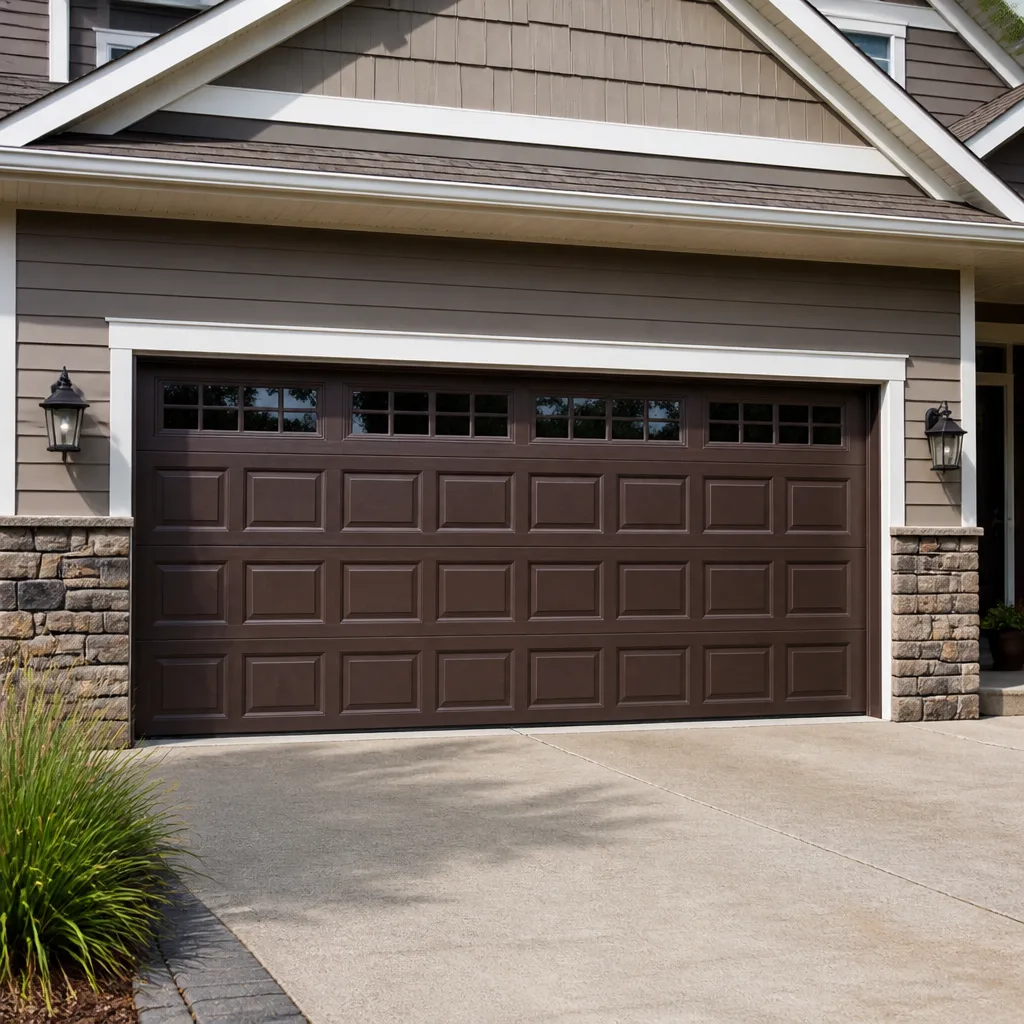 Raised-panel steel
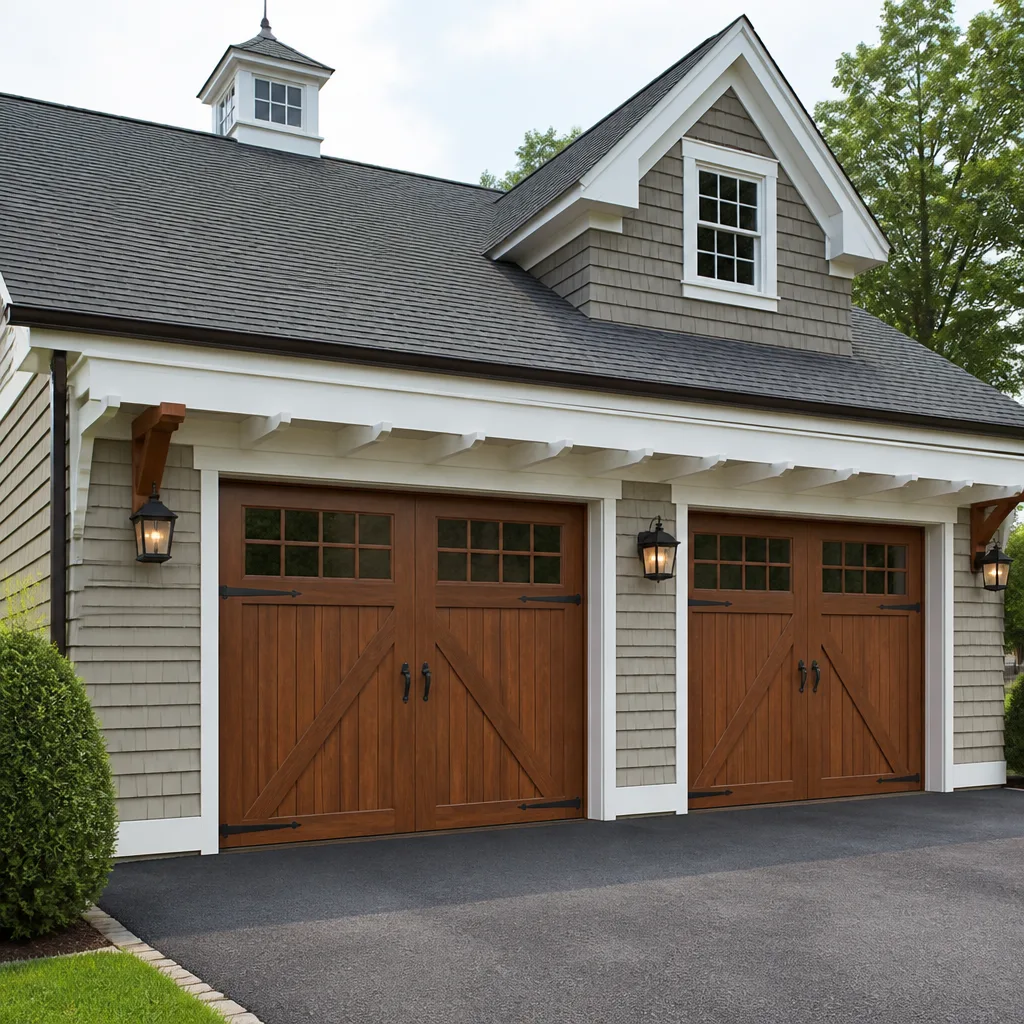 Carriage house
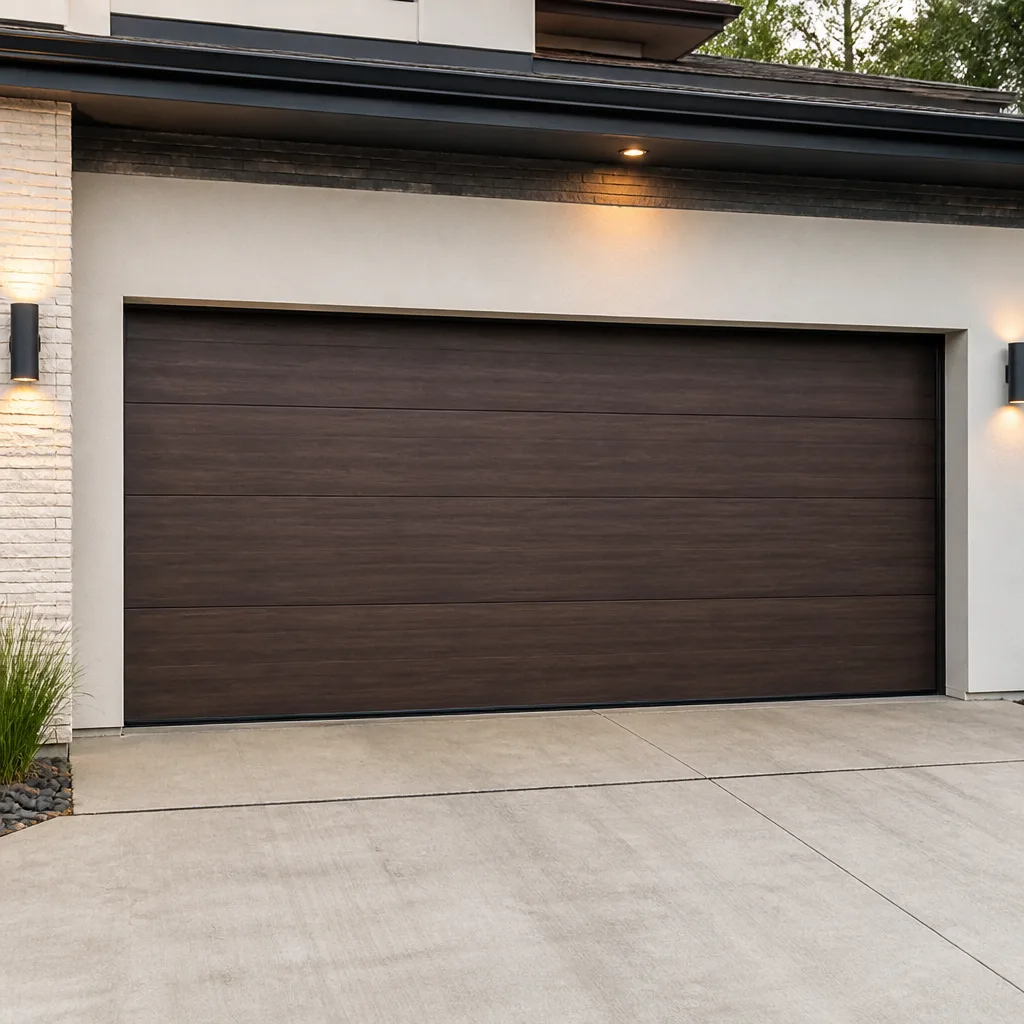 Modern flush
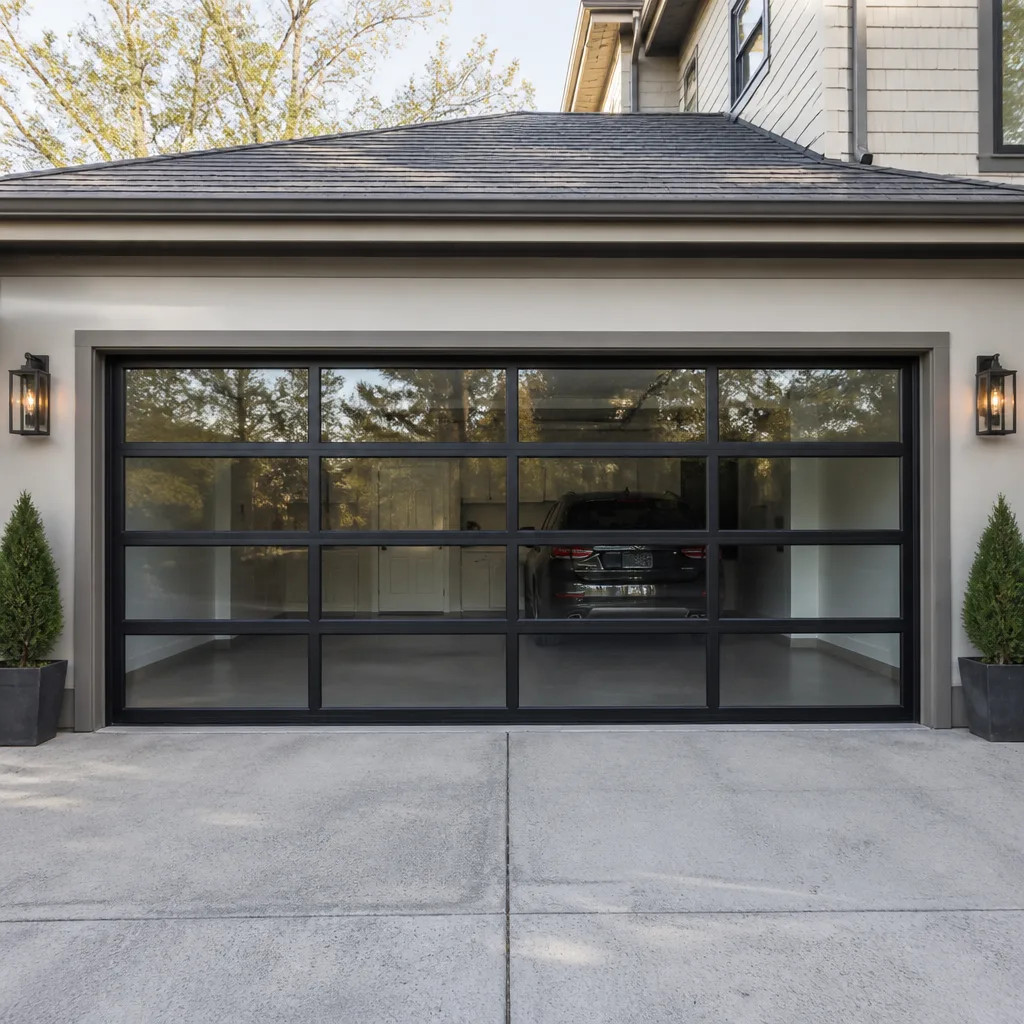 Full-view glass
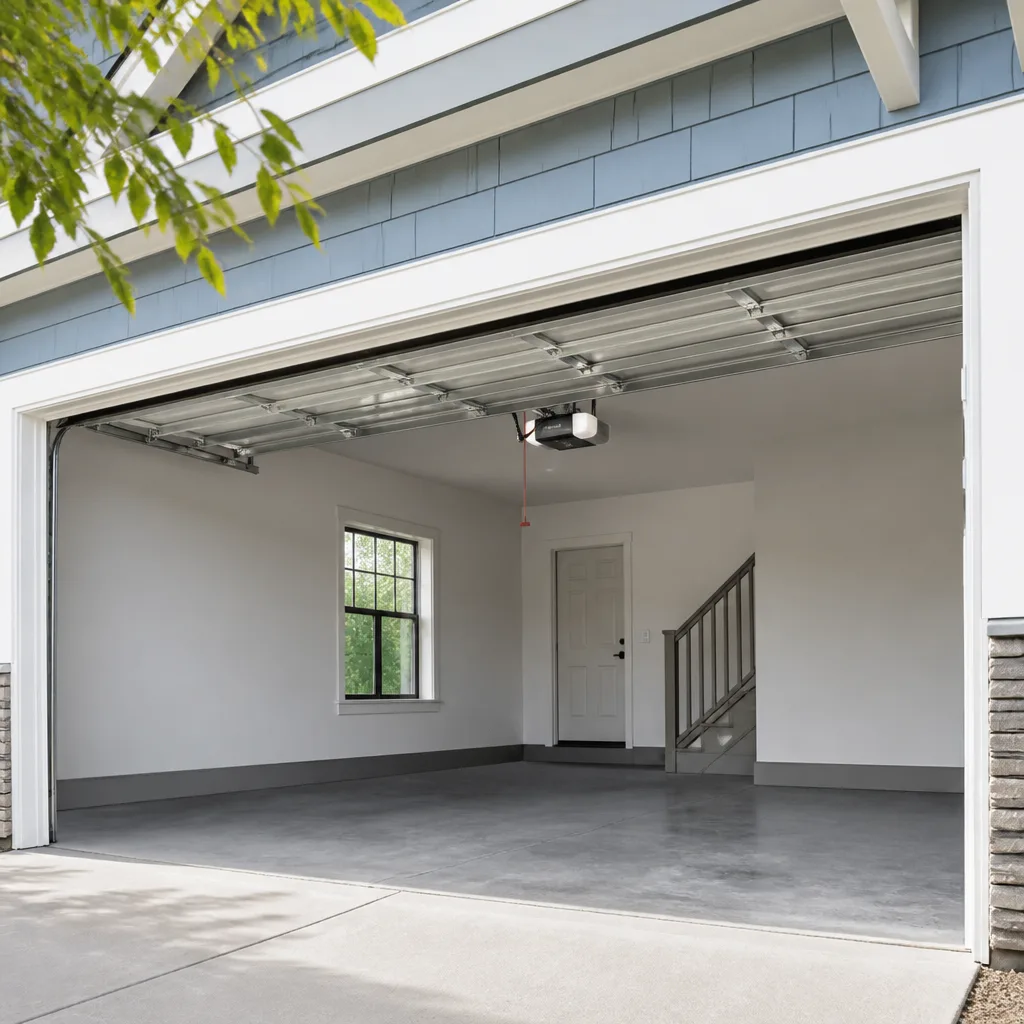 LiftMaster openers
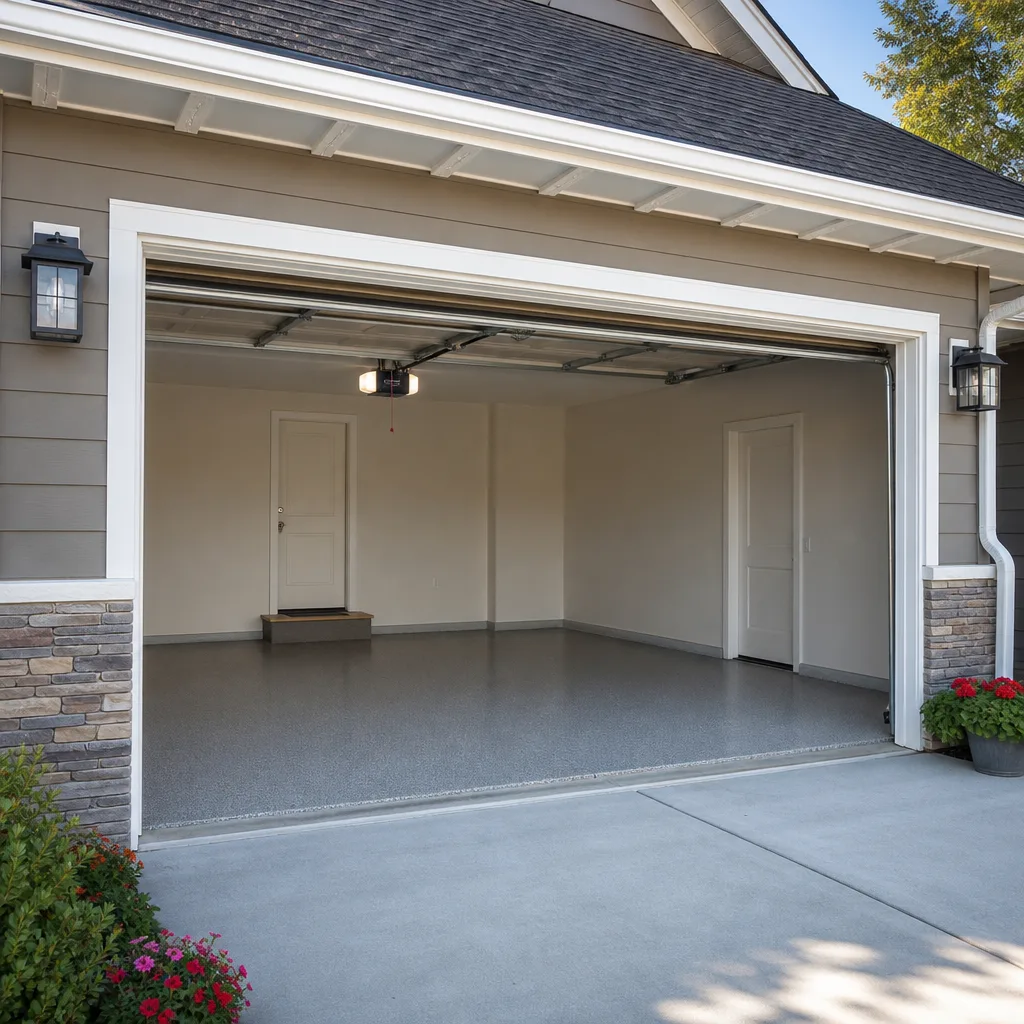 Chamberlain openers
Full 25-point door and opener safety check with every visit - springs, cables, rollers, tracks, and your LiftMaster or Chamberlain opener included
You get a price before we start. It does not change when the truck arrives.
Get your free estimateGarage Door Repair Maintenance Checklist for Santa Clarita Homeowners
WD-40 is the most common product homeowners reach for when a garage door starts squeaking in Santa Clarita. It is also one of the worst things you can put on a torsion spring. That thin spray strips the heavier grease the spring needs, wears away the protective film, and leaves bare metal exposed to the dry heat and canyon dust that define our climate. Most generic maintenance checklists will tell you to “lubricate moving parts” and leave it at that. This more guides & resources approach will not. You will learn exactly what to buy, where to apply it, what a failing roller sounds like versus a failing spring, how to test the safety reverse in under two minutes, and what belongs on a professional’s plate rather than yours. By the end, you will have a maintenance routine built specifically for how garage doors actually age in the Santa Clarita Valley.
Styles & brands we work with
Quick Answer
A garage door maintenance checklist for Santa Clarita homeowners should follow a three-tier schedule: monthly visual and audio checks, quarterly lubrication and hardware tightening, and an annual professional tune-up that covers spring tension calibration, cable inspection, and safety system verification. In this climate, lubrication degrades faster and metal expands more than in coastal areas, so using the correct silicone or lithium-based product on the right parts matters as much as the schedule itself.
Table of Contents
- Why Santa Clarita’s Climate Changes the Maintenance Math
- The Monthly Checklist: What to Look and Listen For
- The Quarterly Checklist: Lubrication, Tightening, and Cleaning
- The Annual Checklist: What a Professional Should Handle
- Exactly What to Use (and What to Never Touch)
- Testing Safety Features in Under Two Minutes
- What a Failing Component Sounds and Looks Like
- Common Mistakes to Avoid
- When to Call a Professional
- Frequently Asked Questions
- The Bottom Line
Why Santa Clarita’s Climate Changes the Maintenance Math
A national garage door maintenance checklist assumes a national climate. Santa Clarita is not a national climate. We get roughly 280 days of sun a year, summer temperatures that routinely cross 100 degrees, and winter mornings that can dip into the high 30s. That swing matters. Metal expands when it is hot and contracts when it is cold. Rubber and nylon components dry out, crack, and become brittle faster in low humidity. The fine dust that blows through Stevenson Ranch, Valencia, and Saugus works its way into roller bearings and hinge pins, turning lubricant into grinding paste. In our experience, a garage door in Santa Clarita that skips maintenance shows wear about 30 percent faster than the same door would in a coastal climate like Ventura or Long Beach.
What that means practically: quarterly lubrication is not a suggestion here. It is the minimum interval that keeps rollers, hinges, and springs from running dry. The good news is that the maintenance itself is not complicated. It takes about 20 minutes once you know the routine.
If you are dealing with an existing issue rather than routine upkeep, our guide to Garage Door Repair in Santa Clarita covers what actually fails in this climate and what it costs to fix.
The Monthly Checklist: What to Look and Listen For
Monthly checks are visual and auditory. No tools required, no crawling under anything. You are building a baseline of what your door sounds and looks like when it is healthy, so a change becomes obvious before it becomes a repair bill.
- Open and close the door once, listening carefully. A healthy door makes a steady, low mechanical sound. Squealing means dry rollers. Grinding means a bearing or hinge is worn. A sharp bang or snap means something cracked or broke. If you hear a snap, stop using the door immediately.
- Watch the door move through its full arc. It should move at one smooth, continuous speed. Jerking, hesitation, or a door that briefly pauses and then lurches means a spring is losing tension or a panel is binding in the track.
- Check the door balance. Pull the release handle (the red cord) with the door closed. Lift the door manually to about waist height and let go. A balanced door stays roughly where you left it. If it drops more than a foot, the springs are losing tension. If it shoots up, the springs are over-tensioned. Do not attempt to adjust spring tension yourself. That is the single most dangerous job in residential garage door work.
- Inspect the weather seal along the bottom of the door. In Santa Clarita, this rubber strip takes a beating from heat and UV. Cracks, gaps, or a seal that has pulled away from the track let dust and June heat into the garage.
- Scan the cables on both sides. Look for fraying, rust, or a cable that looks loose rather than taut. A frayed cable can snap without warning. If you see visible strands separating, stop using the door and call a professional.
If any of these checks turns up something that concerns you, our Brock Garage Doors Santa Clarita home page outlines what a full-service call looks like and how we price it.
The Quarterly Checklist: Lubrication, Tightening, and Cleaning
Every three months, set aside about 20 minutes for lubrication and hardware checks. This is the highest-leverage maintenance you will do. It prevents more repair bills than anything else on this list.
What to Lubricate (and What to Leave Alone)
The short version: lubricate the moving metal or nylon parts. Do not lubricate the track. Tracks guide the wheels; they do not need lubrication, and a greasy track collects dust and grit, which accelerates roller wear.
Parts to Lubricate
- Springs: Light coating of lithium grease or white lithium spray.
- Hinges: A small dab of white lithium grease at each pivot point.
- Rollers: Silicon spray on the bearing. If your rollers have a sealed bearing (nylon rollers with no visible ball bearings), skip the spray and focus on the hinge.
- Lock mechanism: Small squirt of graphite or silicon spray if it feels stiff.
- Bearing plates: Where the torsion bar meets the end plates, a light coat of lithium grease.
Parts to Never Lubricate
- The track rails: Keep them clean and dry.
- Yourself with WD-40: Do not put WD-40 on any garage door component. It is a solvent and moisture displacer, not a long-term lubricant. On springs, it strips away persistent grease and accelerates wear.
Hardware Tightening
After lubricating, check the hardware. A garage door cycles hundreds of times a month, and vibrations loosen nuts and bolts over time. Use a socket set to snug up the bolts on the hinges, the brackets that mount the horizontal and vertical tracks, and the fasteners on the opener rail. Do not over-torque; you want snug, not stripped. If you find a bolt that is visibly loose or missing, replace it before the issue compounds.
Track Cleaning
Wipe the inside of the vertical and horizontal tracks with a clean rag. If you see a buildup of old grease and dust, use a mild degreaser and wipe dry. Do not leave residue. A clean track helps the rollers roll instead of skid.
The Annual Checklist: What a Professional Should Handle
Some maintenance work is not a DIY job. The line is not arbitrary, and our How to Hire a Garage Door Contractor in Santa Clarita: A Step-by-Step Guide can help you find the right professional. High-tension springs store enough energy to break bones or cause serious injury if they let go while someone is working near them. Cables under load are the same. A professional tune-up covers the items below, and a homeowner should leave these to a trained technician.
What a professional tune-up should include, and what a homeowner cannot safely replicate:
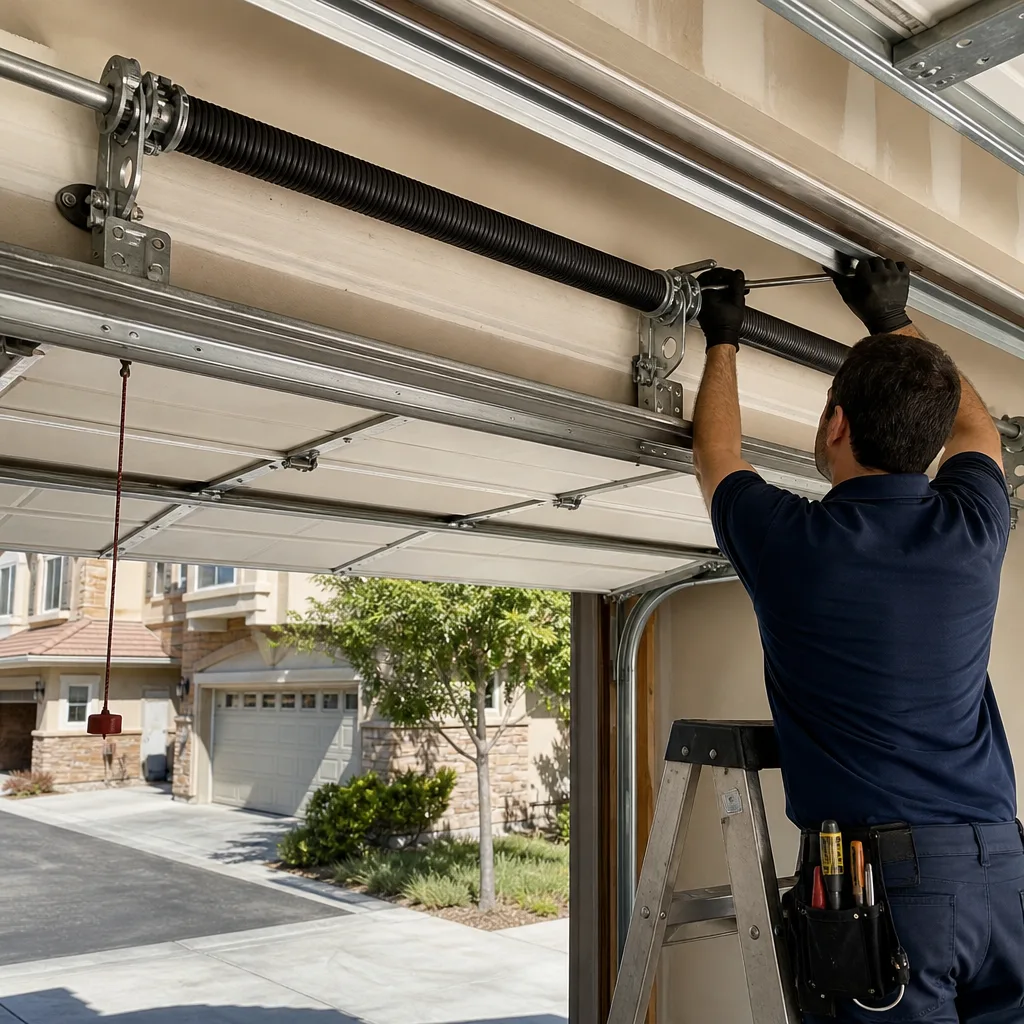
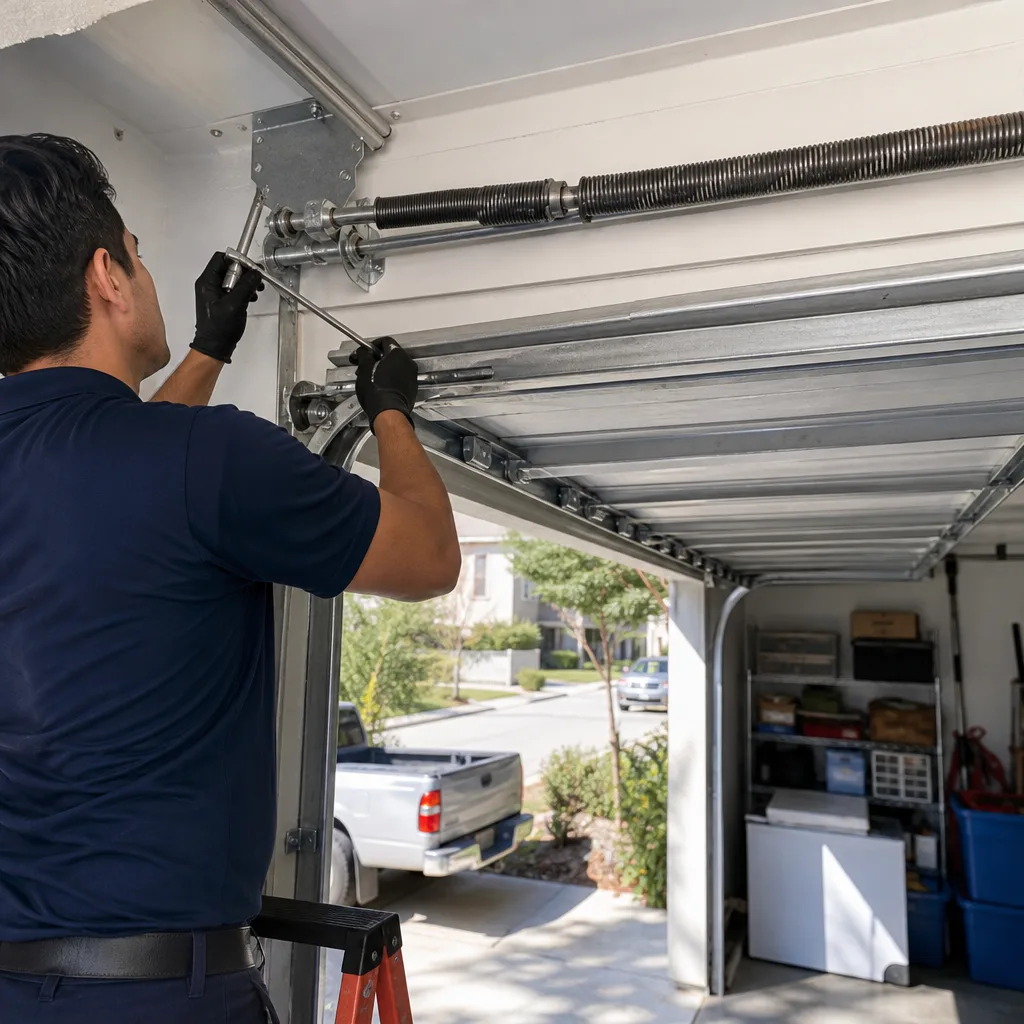
- Spring tension calibration: Torsion springs lose tension gradually and need periodic adjustment. This requires winding bars and a working understanding of torque and cycles. Attempting it with improvised tools is the top cause of garage door injuries in the United States.
- Cable inspection and replacement: A cable can look intact while individual strands have already started to snap. Professionals check for internal strand breakage and replace cables before they let go.
- Drum alignment: The cable drums on each end of the torsion bar must wind evenly. Misalignment causes uneven lifting and premature cable wear.
- Opener force settings: An opener set too high will not reverse when it should. A professional recalibrates the force and travel limits to the manufacturer’s specification.
- Safety sensor verification: Photoelectric eyes must be aligned and functioning. A technician confirms proper operation before the door is considered safe.
- Panel and track inspection: Hairline cracks, worn rollers, bent track sections, and weak panel joints are all things that are hard to spot without experience.
Brock’s technicians work on LiftMaster, Chamberlain, Genie, Clopay, Amarr, Wayne Dalton, Craftsman, and Raynor systems, so the tune-up is specific to your equipment. A written price is provided before any work starts, and every repair carries a written 365-day guarantee. The 365-Day Done Right Promise means exactly what it says: if the repair fails within a full year, we come back at no charge.
Exactly What to Use (and What to Never Touch)
Most generic checklists say “lubricate moving parts” without telling you what product to buy. That omission causes more damage than skipped maintenance. Garage door lubricant is not one size fits all.
What to Buy
| Component | Product | Why |
|---|---|---|
| Torsion springs | White lithium grease (spray or tube) | Heavy enough to stay on under load, resists heat, doesn’t run off |
| Hinges | White lithium grease | Stays put at the pivot point |
| Rollers with exposed bearings | Silicone spray | Light, penetrates the bearing without attracting dust |
| Rollers with sealed bearings | Do not lubricate | Sealed bearings are permanent-lubricated from the factory |
| Lock mechanism | Graphite powder or silicone spray | Won’t gum up the keyway |
| Tracks | Nothing; clean and dry only | Lubricant attracts dust and causes the rollers to skid |
In our experience, most hardware stores in the Santa Clarita Valley stock a basic white lithium spray and a silicone spray for under $15 combined. That 15 bucks, applied quarterly, extends the life of hinges and rollers by years.
What to Never Touch
- WD-40: A solvent, not a lubricant. On springs, it strips the grease and accelerates corrosion. Stop using it on garage door parts.
- Motor oil or penetrating oil: Too thin, runs off, and collects dust.
- Cooking spray: Breaks down under heat and creates a sticky film that attracts dirt.
- Grease on rollers with sealed bearings: The bearing is already lubricated. Adding grease creates a dust magnet.
- Anything on the track: Keep it dry.
Testing Safety Features in Under Two Minutes
Since 1993, federal law and California building code have required all residential garage door openers to include an auto-reverse mechanism and photoelectric sensors. The law exists because garage doors have crushed people, and children have been the most common victims. Testing these systems takes under two minutes and should happen monthly.
The Auto-Reverse Test
- Place a 2-by-4 or a roll of paper towels flat on the ground where the door closes.
- Close the door using the opener.
- Watch what happens when the door contacts the object.
The door must reverse within two seconds of contact and return to the open position. If the door crushes the object and keeps closing, the opener’s force setting is too high or the auto-reverse mechanism has failed. Stop using the door immediately and schedule a repair.
The Photo-Eye Test
- With the door open, press the close button.
- Wave your hand or a broom handle between the two sensors on either side of the door opening, about six inches off the ground, while the door is moving.
- The door should stop and reverse immediately.
If the door keeps closing when the beam is broken, the sensors are misaligned, dirty, or faulty. Wipe the lenses with a dry cloth first. If that does not fix the problem, call a professional. A photo-eye failure is a code violation and a real safety hazard. For opener-specific issues, our guide to Garage Door Opener Repair in Santa Clarita walks through the most common failure points on Chamberlain, LiftMaster, and Genie units.
What a Failing Component Sounds and Looks Like
Most homeowners wait until a door stops working to call for help. The door always tells you first. Our Garage Door Warning Signs: A Santa Clarita Homeowner’s Reference Guide covers the specific sounds and sights to recognize, organized by component.
Torsion Spring
Sound: A loud bang or snap, like a gunshot from inside the garage. That is the sound of a spring snapping under torque. Look: A visible gap in the coil, anywhere along the spring. What it means: The door is now dangerous to operate manually and with the opener. Call a professional the same day. In neighborhoods throughout Santa Clarita, this is the most common urgent repair call we see from Canyon Country to Newhall.
Cables
Sound: A twanging or popping sound when the door moves, or a sudden loud crack. Look: Frayed wire strands, rust, a cable that hangs loose rather than running tight along the door. What it means: A snapped cable means the door can drop unevenly or jam. Do not use the door until the cable is replaced. Garage Door Cable Repair in Santa Clarita covers what this repair involves and what it typically costs.
Rollers
Sound: A squealing or grinding sound as the door moves. The squeal means the bearing is dry. Grinding means the bearing is worn out. Look: A roller that wobbles side to side in the track, or a flat spot on a nylon roller. What it means: Dry rollers need lubrication. Worn rollers need replacing. A roller that breaks mid-cycle can derail the door.
Hinges
Sound: A clicking or popping sound at specific points in the door’s travel. Look: A hinge that appears bent, cracked, or loose at the rivet. What it means: A failing hinge puts uneven stress on the panels. Replace it before the panel cracks.
Opener
Sound: Grinding from the motor, a rattling chain, or a door that reverses for no reason. Look: Chain slack, a stripped gear, or a door that starts and immediately stops. What it means: Opener issues can be mechanical or electrical. Let a technician diagnose it.
Common Mistakes to Avoid
- Reaching for WD-40 before anything else. It strips lubrication and accelerates spring wear. In our Santa Clarita service area, we see this often enough that we keep a stock of replacement springs for doors that failed early because of chronic WD-40 use.
- Lubricating the tracks. Tracks are dry-run surfaces. Any lubricant on the track gathers dust from the canyon winds and turns into a grinding compound against the rollers.
- Thinking a squeak is just a squeak. A squealing roller is a dry bearing. Let it go for six months and that roller seizes, which snaps the roller stem or derails the door.
- Skipping the balance test. A door that drops when released from the open position is warning you the springs are fatiguing. Catching this early is a $150 to $250 spring replacement. Letting it fail means an emergency call when the door will not open at all.
- Tightening bolts with an impact driver. Over-torqued hardware strips the threads and creates a bigger problem. Snug is enough.
- Testing the auto-reverse by sticking a hand under the door. Never test a safety mechanism with your body. Use a 2-by-4, a roll of paper towels, or an empty cardboard box.
- Adjusting spring tension with improvised tools. Winding bars exist for a reason. A screwdriver or pipe in the winding cone can slip and the spring will release its stored energy into whatever is in the way. This is not a risk to take.
When to Call a Professional
Some signs should trigger a call, not a maintenance check. A snapped torsion spring, a frayed cable, a door that comes off the track, or a photo-eye system that will not reverse all mean the door is unsafe to operate. The same goes for any door that will not open or close fully, or an opener that runs but does not move the door. In these cases, do not force the door. Disconnect the opener if you need to close the garage, then leave it alone until help arrives. Springs under tension, cables under load, and heavy door panels do not forgive mistakes. Brock Garage Doors Santa Clarita offers Garage Door Repair services with free estimates in Santa Clarita, and a live person answers the phone 24/7. Call (661) 592-1666 and we will get a uniformed, background-checked technician out to your home with a written price before any work starts.
Frequently Asked Questions
A professional garage door tune-up in Santa Clarita typically runs between $89 and $150, depending on the door type and opener. Quarterly DIY maintenance costs about $15 for lubricant and consumables. A full annual tune-up that includes spring calibration and safety verification is the single best investment in avoiding a $250 spring replacement or a $400 cable job.
White lithium grease is the best lubricant for springs and hinges in Santa Clarita’s hot, dry climate because it stays in place under load and resists heat. Silicone spray works well for roller bearings. Never use WD-40, motor oil, or cooking spray.
Every three months. The heat and low humidity in the Santa Clarita Valley break down lubrication faster than in coastal areas, so quarterly lubrication is the minimum to keep springs, hinges, and rollers from running dry.
Yes, for the monthly and quarterly checks: lubrication, hardware tightening, track cleaning, and safety testing. Leave spring tension adjustment, cable replacement, and track realignment to a trained professional, as these components are under extreme tension.
Most spring replacements in Santa Clarita run $150 to $250 per spring, including the part and labor. At Brock, we give the written price before the work starts, and the repair is covered in writing for 365 days. If it fails in that window, we return at no charge.
Our 365-Day Done Right Promise covers the labor and parts on every repair we perform for a full year. If the covered repair fails in that period, we return and make it right at no charge. The guarantee is in writing on every job.
The Bottom Line
A garage door in Santa Clarita needs a different maintenance approach than a door in a coastal city. The heat, dust, and temperature swings put more stress on springs, cables, rollers, and lubricant. The fix is not more work; it is the right work on a consistent schedule. Monthly checks take ten minutes and catch problems before they become repair bills. Quarterly lubrication with the correct products extends the life of every moving part. An annual professional tune-up handles the dangerous work and keeps the door safe and code-compliant. Use a lithium-based lubricant on springs and hinges, silicone on roller bearings, and nothing on the tracks. Test the auto-reverse and photo-eye monthly. When something goes wrong, stop using the door and call a professional. Garage Door Repair in Santa Clarita is available 24/7 at (661) 592-1666 with free estimates, written pricing, and a written 365-day guarantee on every repair.
Written by Wade Mercer, Owner at Brock Garage Doors Santa Clarita, serving Santa Clarita since 2001.
See the difference
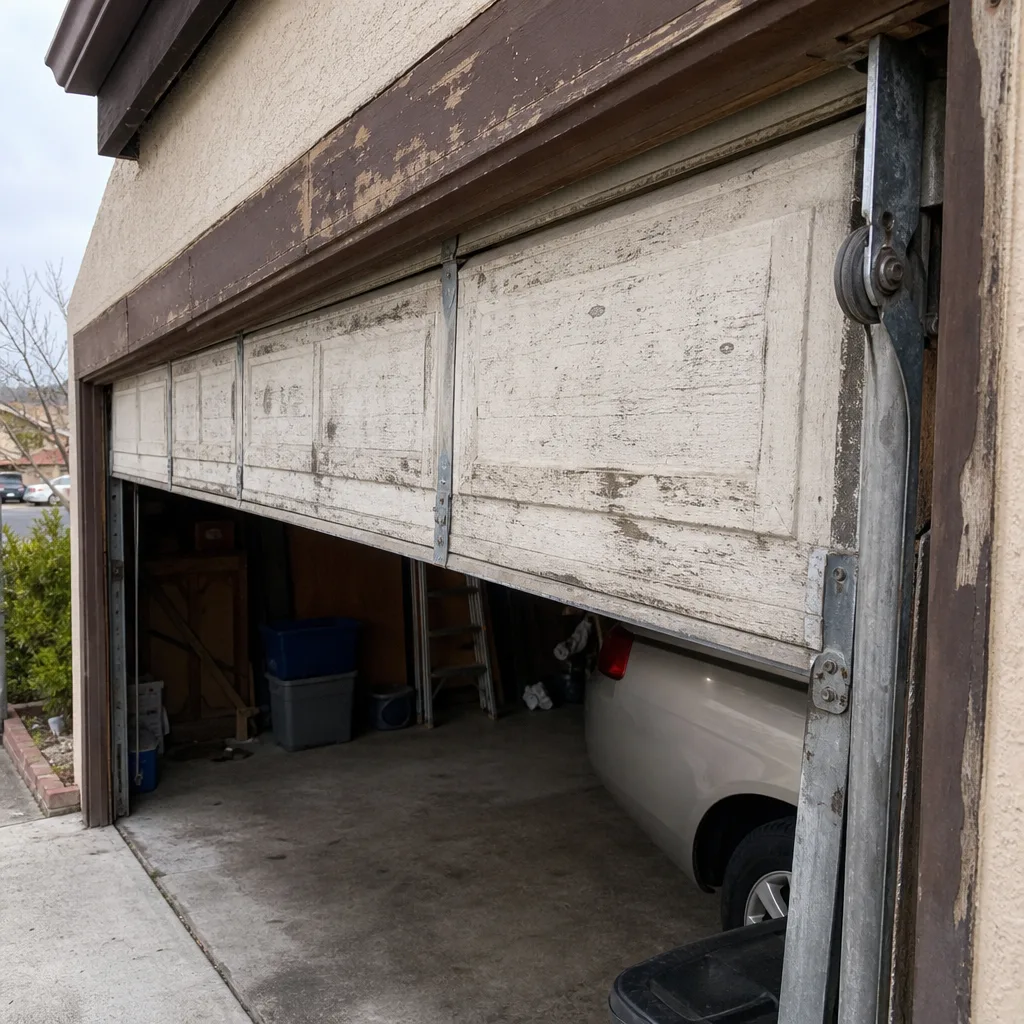 Before
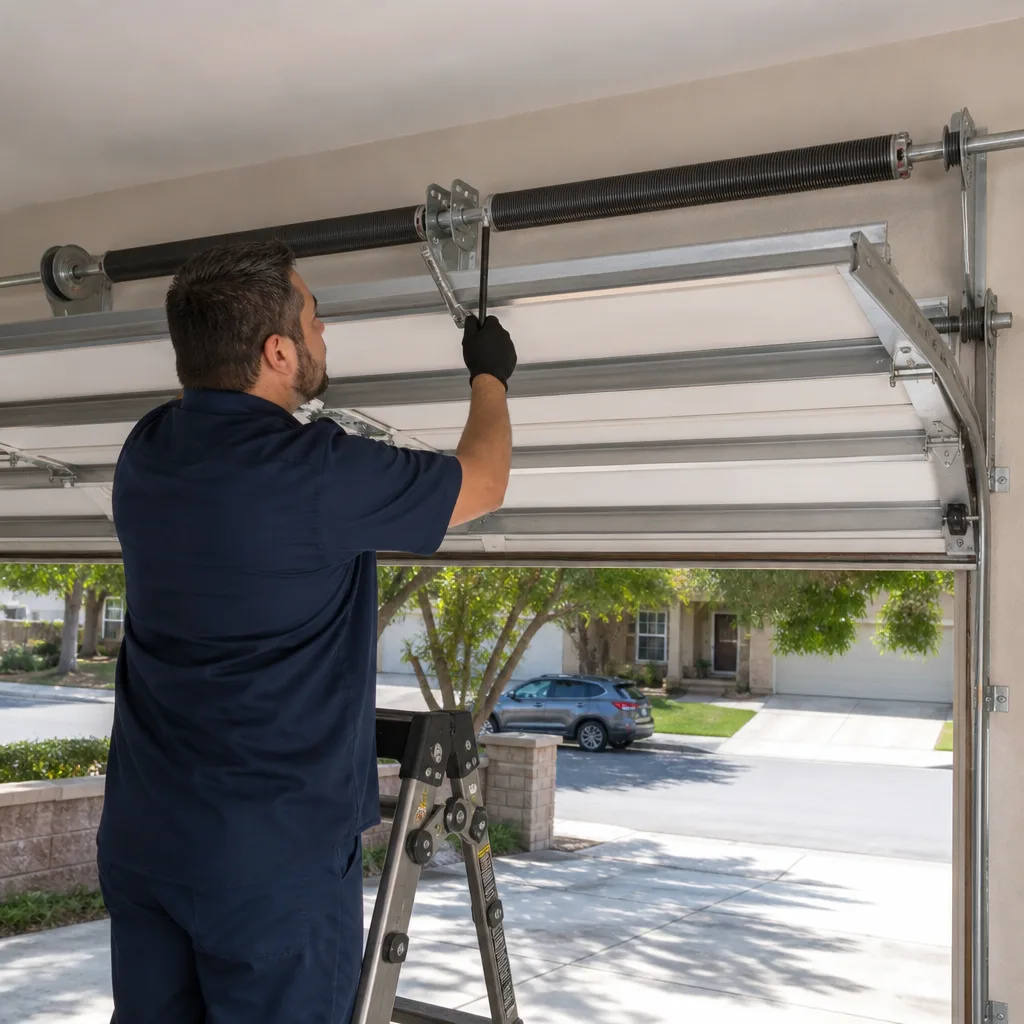 After
After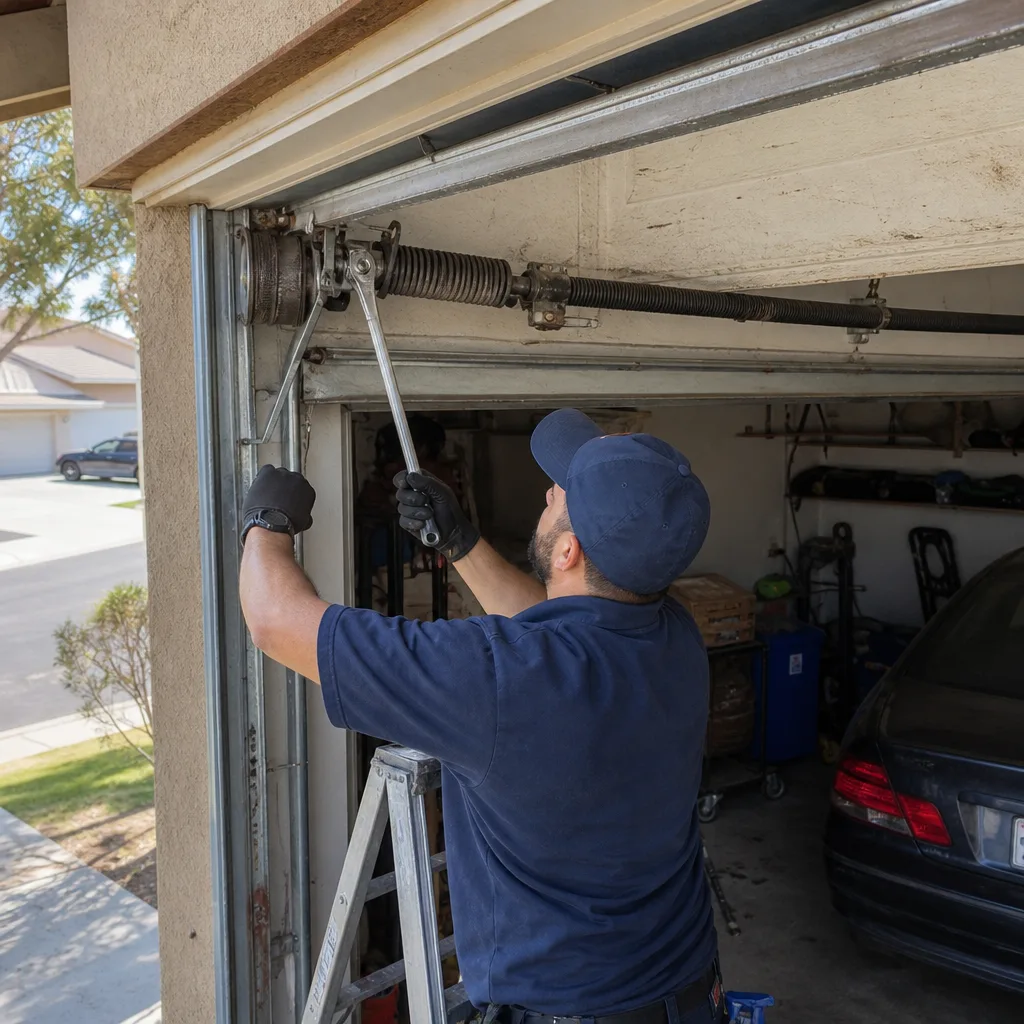 Before
 After
After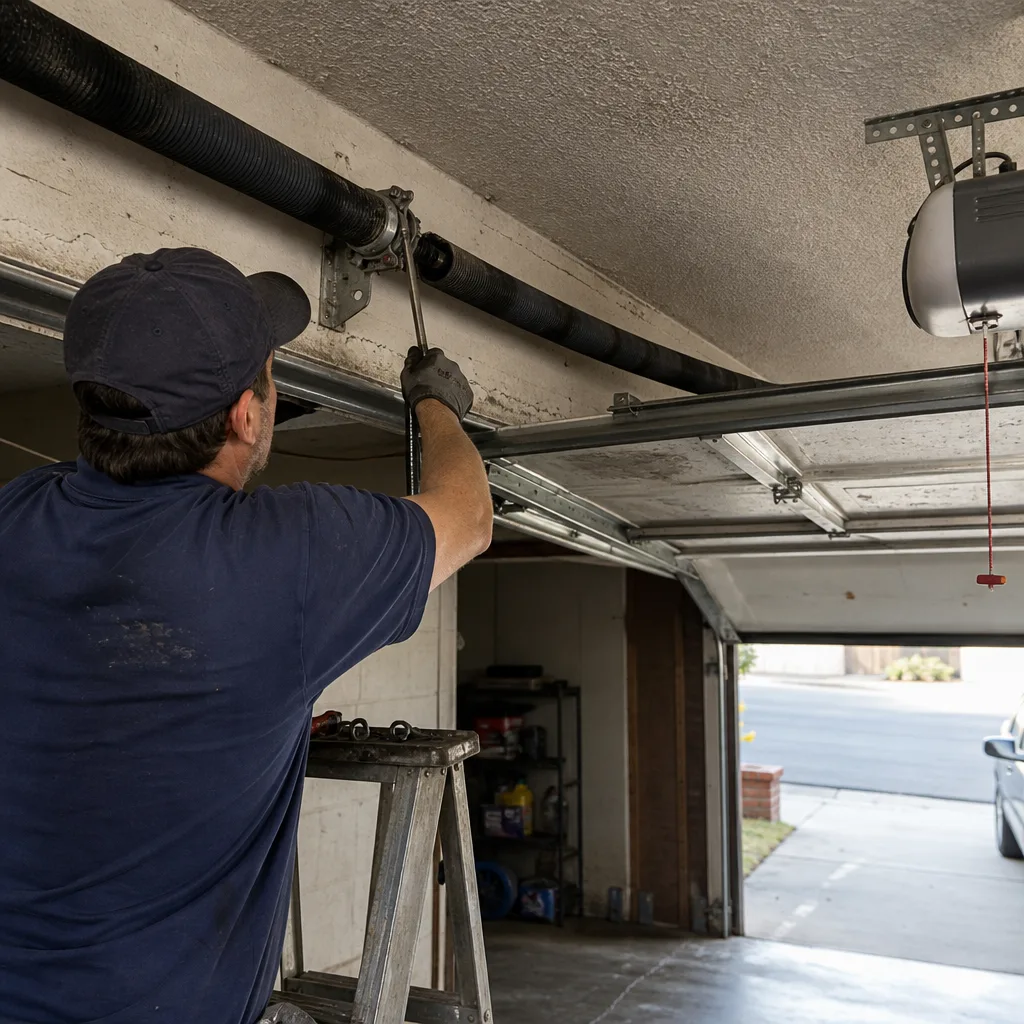 Before
 After
After