
Last updated October 16, 2026
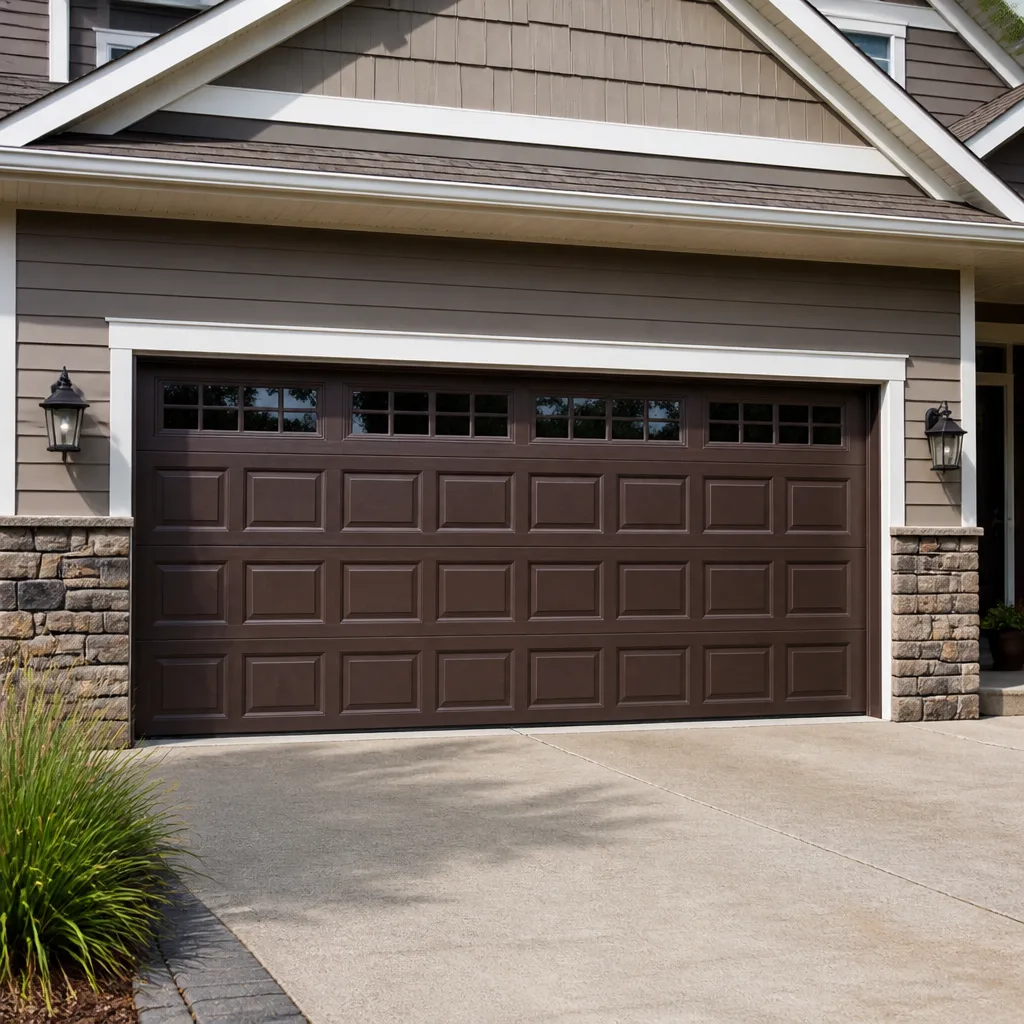 Raised-panel steel
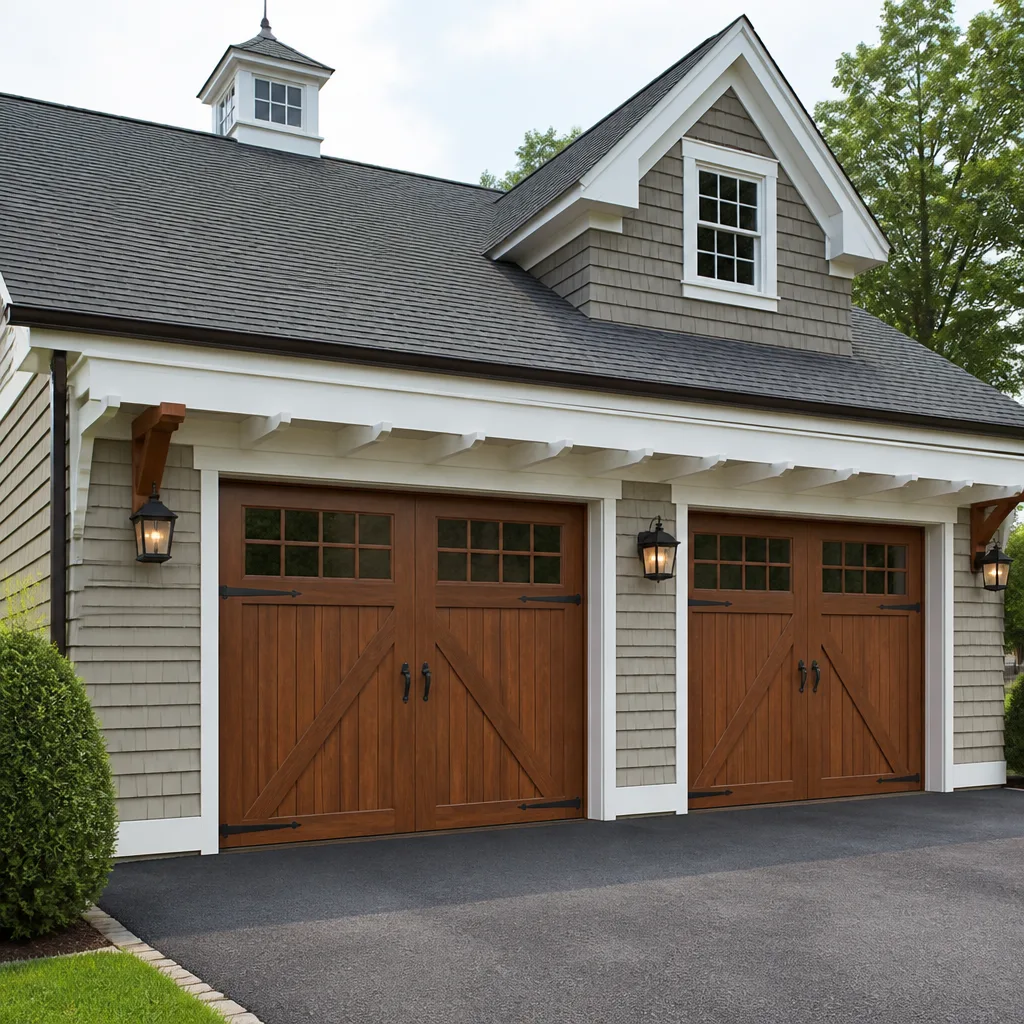 Carriage house
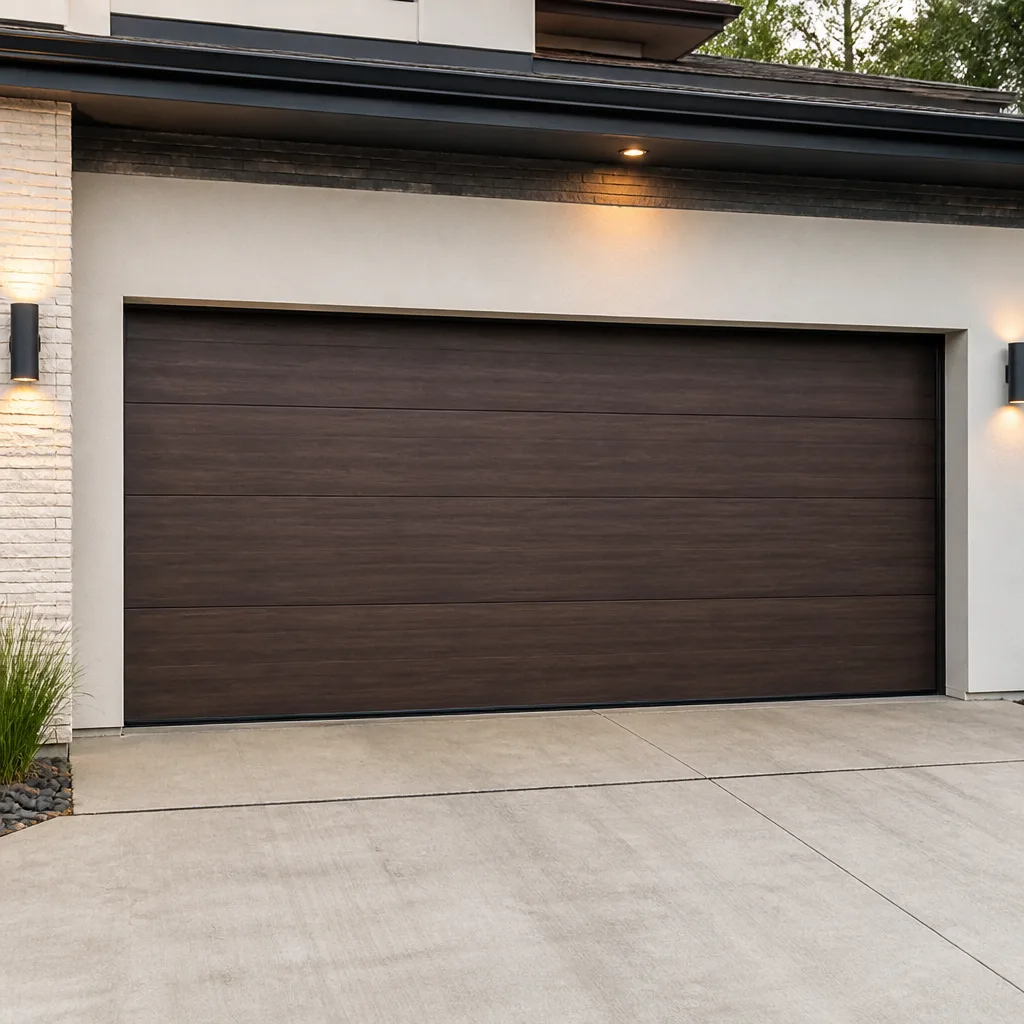 Modern flush
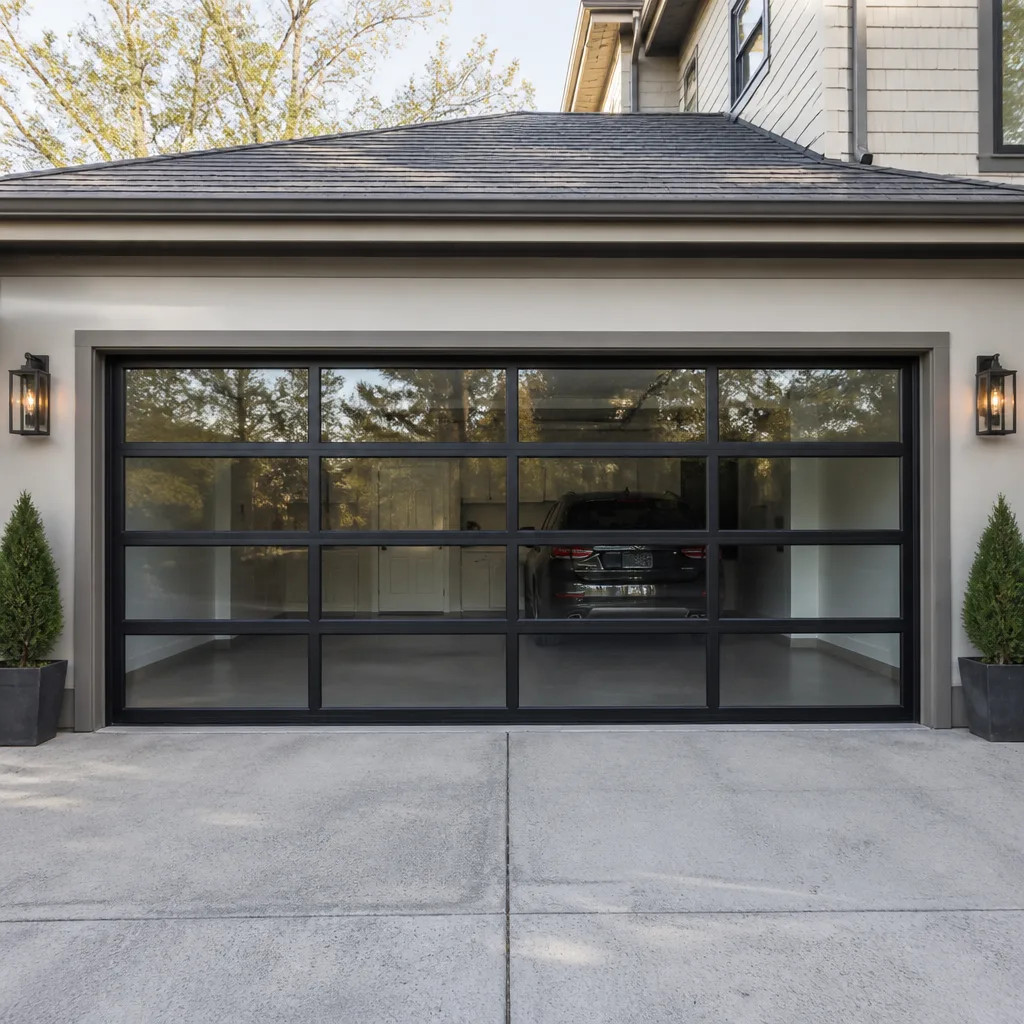 Full-view glass
 LiftMaster openers
 Chamberlain openers
Full 25-point door and opener safety check with every visit - springs, cables, rollers, tracks, and your LiftMaster or Chamberlain opener included
You get a price before we start. It does not change when the truck arrives.
Get your free estimateHow to Hire a Garage Door Contractor in Santa Clarita: A Step-by-Step Guide
Here’s a number that surprises most Santa Clarita homeowners: a garage door weighing 250 to 400 pounds hangs on a spring system that fails, on average, every 7 to 10 years. The door doesn’t warn you. The spring snaps at 2 p.m. on a Tuesday or 6 a.m. on a holiday, and suddenly you’re making a hiring decision under pressure. That pressure is exactly what less-than-square operators count on. This guide gives you a specific, repeatable process for vetting a garage door contractor in Santa Clarita, so you hire someone who puts the price in writing and stands behind the work for a full year. For more guides & resources, see our blog.
Quick Answer
To hire a garage door contractor in Santa Clarita, start by checking the contractor’s license on the CSLB website (directions below), then ask for a written estimate with line-item pricing before agreeing to any service call, and confirm the warranty is documented in writing, not given verbally. A legitimate operator will hand you a written price before starting work and guarantee the repair in writing for at least a year. If any candidate deflects on those three points, move on.
Styles & brands we work with
Table of Contents
- Step 1: Check the California Contractor License Before Anything Else
- Step 2: The Written Estimate Test
- Step 3: The Warranty Question (And What a Real Answer Sounds Like)
- Step 4: The Garage Door Brands You Should Hear Mentioned
- Step 5: Questions to Ask Before Scheduling
- Step 6: Red Flags During the Service Call Itself
- Step 7: What a Fair Price Looks Like in Santa Clarita
- Common Mistakes to Avoid
- When to Call a Professional
- Frequently Asked Questions
Step 1: Check the California Contractor License Before Anything Else
California requires any contractor performing work over $500 in labor and materials to hold a valid CSLB license. A garage door repair might come in under that number, but the operator doing the work should still carry the license. Checking takes under 60 seconds and eliminates bad actors before you ever pick up the phone to schedule.
- Go to the CSLB website (cslb.ca.gov) and click “Check a License.”
- Enter the business name or the license number if the company advertises one.
- Look for the license status: “Active” is the baseline. Anything else, including “Suspended” or “Expired,” means walk away.
- Check the license classification. Garage door work typically falls under C-61/D-28 (Door and Gate) or a General Building (B) classification. If the license classification doesn’t match the work, that’s a problem.
- Note the issue date. A license held for five or more years suggests staying power. A license issued 90 days ago isn’t automatically disqualifying, but it is a data point.
Beyond the status field, look for workers’ compensation insurance. If the contractor has no employees, they may be exempt, but if they’re sending a crew, workers’ comp protects you from liability if someone gets hurt on your property.
In Santa Clarita, we see homeowners hire unlicensed operators on a regular basis because the quote came in $40 lower. The risk isn’t worth the savings. An unlicensed worker who gets injured on your property can leave you exposed, and you’ll have no regulatory body to file a complaint with when the repair fails.
We’re an independently owned and operated location within the Garrison Partners network, which means our licensing and insurance get reviewed at a level most solo operators never face. That’s accountability, not marketing.
Step 2: The Written Estimate Test
This is the single most effective filter in the entire hiring process. A verbal estimate is not a price. It’s a starting point for an upsell. The technician who quotes “$200 or so” over the phone and then “discovers” the problem needs two additional parts at your door is not estimating. He’s anchoring.
Here’s how the test works: when you call about a repair, ask a simple question. “Will you put the price in writing before you start any work?”
Listen to the answer. A real answer sounds like this: “Yes. We’ll inspect the door, write down what needs to be done, and hand you a written price before we touch a bolt.”
A deflection sounds like this: “Well, it depends on what we find,” or “We’ll give you a good deal,” or “I’ve been doing this 20 years, you don’t need it in writing.”
Those are dismissals. A contractor who will not commit to a written price before starting work is signaling that the final invoice will be whatever he can get away with. We put the price in writing before every job because the number on the invoice should match the number you approved, every time.
What Every Written Estimate Should Include
- Specific part names (torsion spring, cable, roller, hinge, opener motor) not generic language like “door fix”
- Brand and model where applicable (a Genie opener, a Clopay panel, an Amarr spring assembly)
- Labor charge as a separate line item from parts
- The exact warranty term in writing, with the coverage window stated in days or years
- Total amount with tax clearly itemized
Line Items Contractors Use to Inflate the Invoice
- “Service fee” applied on top of the quoted labor after the work is done
- “Disposal fee” for hauling away parts without mentioning it beforehand
- “Emergency surcharge” for a call placed at 7 p.m. when no surcharge was discussed on the phone
- “Shop supplies” or “miscellaneous materials” as vague catch-all line items
- “Adjustments” or “balancing” as separate charges when that work is part of any legitimate repair
Every one of these should be challenged before you sign anything. If the contractor is straight, the line items will make sense without explanation. If you need to ask what something means, that’s worth asking whether you should be signing at all.
The broader context here matters for Santa Clarita homeowners specifically. Our market has several national franchise operations, a handful of licensed independents, and a long tail of unlicensed operators working out of pickups. The Brock Garage Doors Santa Clarita home business runs on a simple rule: the written price is handed over before any work starts, so there is no door-sale surprise and no invoice creep.
Step 3: The Warranty Question (And What a Real Answer Sounds Like)
This is the area where homeowners in Santa Clarita lose the most money over a five-year period. A garage door spring that is installed incorrectly can fail in six weeks. A cable that’s slightly under-tensioned can snap in four months. If the contractor’s warranty is verbal, you’ll be paying for the second repair out of pocket and probably hiring a different company to do it.
So ask this question, exactly: “What does your warranty cover in writing?”
A legitimate answer sounds like this: “Your repair is covered in writing for 365 days. If the same part fails within that window, we return and repair it at no charge.”
A deflection sounds like this: “We stand behind our work” or “If you have any issues, just call us.” Those are not warranties. Those are sentences designed to end the conversation without committing to anything.
A third, trickier deflection is the “warranty upsell”: “We can add an extended warranty for an additional $89.” A real warranty comes with the work, not as a separate product. If the contractor’s standard repair doesn’t carry a written warranty of at least 90 days, something is wrong. The best operators in the trade write a full year.
Every Brock Garage Doors Santa Clarita repair carries a written 365-day guarantee, which we call the 365-Day Done Right Promise. If a covered repair fails within that window, a technician returns and corrects it at no additional charge. There’s no fee for that second visit, no negotiation, no fine print about “normal wear.” The guarantee is in writing because a verbal one isn’t worth the air it takes to deliver.
Step 4: The Garage Door Brands You Should Hear Mentioned
Here’s a conversation we’ve had more times than we can count. A Santa Clarita homeowner calls and says, “My opener is making a grinding noise, the door is jerking on the way up, and the remote won’t stay paired.” We ask what opener they have. They say, “I don’t know. A white one?”
That’s normal. Homeowners don’t need to know their opener brand. But the contractor should care. The technician who shows up without asking about the system is going to apply a generic fix to a specific problem, which is how you end up with a door that works for two weeks and fails again.
Our technicians are trained on eight major brands: LiftMaster, Chamberlain, Genie, Clopay, Amarr, Wayne Dalton, Craftsman, and Raynor. That matters because a Wayne Dalton TorqueMaster spring is not interchangeable with a standard torsion spring. A Clopay panel uses a specific hinge spacing. A Genie opener has a different logic board than a Raynor opener. The right fix is the one that matches your system, not whatever part is on the truck.
If you’re comparing contractors and one of them starts naming specific brands based on your door’s configuration, that’s a technician. If another says “we work on all kinds of doors” and changes the subject, that’s a salesperson who may be planning to recommend a full replacement rather than a repair.
For the record, the most common systems we service in Santa Clarita are LiftMaster and Chamberlain openers paired with Clopay or Amarr doors. If that’s what you have, the parts are available locally, and a competent repair is almost always possible same-week.
Step 5: Questions to Ask Before Scheduling
The phone call is your vetting tool. You can disqualify 80% of the market in the first three minutes. Here’s the exact script we recommend, with notes on what a real answer sounds like.
Question 1: “Are you licensed in California, and what’s your license number?”
A real answer includes a number, immediately. A stall, a promise to “text it later,” or a deflection toward reviews is a fail. Take the number and verify it on the CSLB site before the technician arrives.
Question 2: “Who shows up at my door, and how do I know they’re your employee?”
A real answer: “Our technician wears a uniform, carries company ID, and has passed a background check.” A vague answer: “We send out our best guy.” You’re letting a stranger into your home and your garage. In Santa Clarita, where garage doors often open directly into the house, this isn’t a formality. Every tech we send has passed a background check and arrives in uniform, so you know exactly who you’re letting in.
Question 3: “Can you put the price in writing before you start?”
We covered this above, but it belongs in the script. The answer to this question determines whether you’re hiring a contractor or taking a gamble. Straight answer: “Yes, always.” Deflection: “We’ll figure it out when we see the door.”
Question 4: “If the repair fails, what happens?”
Listen for the word “written.” “We give you a written one-year warranty” is a yes. “We’ll take care of you” is a no. The question feels aggressive, but any legitimate contractor has answered it a thousand times and will not blink.
Question 5: “What brands do you work on?”
If the answer names specific manufacturers without hesitation, you’re talking to a technician. If the answer is “all of them,” you’re talking to a generalist. “All of them” usually means “none of them well.”
One more question worth asking in Santa Clarita specifically: “Do you stock parts locally or are you ordering them?” In a city our size, the good operators keep a rolling inventory of common torsion springs, cables, rollers, and opener gears. The operator who has to order every part is going to leave your door inoperable for days.
Step 6: Red Flags During the Service Call Itself
The vetting doesn’t end when the technician arrives. In fact, some of the most useful information you’ll get comes during the first ten minutes of the visit. Here’s what to watch for.
Red Flag 1: The tech never touches the door before quoting a price.
A legitimate repair requires a visual inspection. The tech should raise the door, lower it, run the opener, and look at the springs, cables, rollers, and tracks. If someone quotes a price while standing in the driveway with the door shut, they’re not diagnosing; they’re selling.
Red Flag 2: The tech recommends replacing every part on the door.
A torsion spring replacement often pairs with a worn cable or a tired roller. That’s legitimate. But when the recommendation is a full system replacement including the door, the opener, the hardware, and the tracks, on a door that’s eight years old, stop and ask why. Some operators make more money on full installations and will steer every repair toward one.
Red Flag 3: The tech won’t show you the broken part.
If you ask to see the damage and the technician says “it’s easier if I just take it apart,” or refuses, that’s a problem. A good technician will show you the broken spring, the frayed cable, the stripped gear, and will explain what happened in plain English. Torsion spring – the thick coiled spring mounted above the door that bears most of the lifting load. If they’re explaining it, you can see it.
Red Flag 4: The price starts changing after the inspection.
This is the most common point of failure. The phone quote was $185, but suddenly the cables “need” to be replaced, and the rollers are “dangerously worn,” and the bracket is “about to fail.” Some of that may be legitimate. But the legitimate version arrives as: “Here’s a written estimate with three line items. I recommend these two now, and the third can wait six months.” The upsell version arrives as pressure to approve it all right now because “it’s already apart.”
A related note: if a technician ever suggests using a garage door without a functioning safety spring, end the visit. A door that weighs 300 pounds cannot be opened safely by hand, and no responsible contractor would suggest otherwise.
Red Flag 5: The tech wants cash only, or wants to be paid personally.
Any contractor running a licensed operation takes checks, cards, and digital payments without blinking. Cash-only is a sign that you’re not dealing with a licensed business, and if the work fails, you’ll have no one to call and no paper trail.
At Brock Garage Doors Santa Clarita, our process runs differently by design. The technician inspects first, writes down what’s broken, explains it to you in the driveway, and hands you a written price. If you approve it, the work starts. If you don’t, the tech leaves and you owe nothing. That’s the Garrison Standard by which every job is run, and it’s not up for negotiation. It’s how Garage Door Repair in Santa Clarita should work, whether you hire us or someone else.
Step 7: What a Fair Price Looks Like in Santa Clarita
Here’s the information most guides won’t give you: actual dollar ranges for common garage door repairs in the Santa Clarita market, so you can self-screen before you ever pick up the phone. For a broader overview, see The Complete Guide to Garage Door in Santa Clarita.
| Repair Type | Typical Range (Santa Clarita) | What Affects the Price |
|---|---|---|
| Single torsion spring replacement | $180 – $340 | Spring cycle count (10K vs. 20K vs. 30K), brand |
| Double torsion spring replacement | $280 – $520 | Both springs should be replaced together; paired set pricing |
| Garage door cable repair | $150 – $275 | Cable type, drum condition, whether the door came off track |
| Opener repair (gear, logic board, or belt) | $140 – $350 | Opener brand, age, and part availability |
| Full opener replacement | $450 – $900 | Opener model, horsepower, drive type (belt vs. chain) |
| Roller replacement (all rollers) | $120 – $220 | Nylon vs. steel rollers, number of rollers |
| Track adjustment or realignment | $100 – $200 | Severity of misalignment, whether brackets are damaged |
| Full door replacement | $1,200 – $4,500 | Door size, insulation, brand (Clopay, Amarr, Wayne Dalton), windows |
These numbers are for the Santa Clarita market specifically. Prices run 10 to 15 percent higher in Los Angeles proper and slightly lower in the Antelope Valley. A quote that comes in dramatically below these ranges should raise the same questions as a quote dramatically above. The operator who quotes $90 for a spring replacement is either installing a 10,000-cycle spring from an unknown manufacturer or planning to find a reason to raise the price on-site.
The one line item that varies most in our market is cables. Garage Door Cable Repair in Santa Clarita typically runs $150 to $275, but if the door has been operated with a broken cable for several cycles, the drum may be damaged, and the job becomes a drum-and-cable replacement, which lands at the top of that range or slightly above.
For opener issues, Garage Door Opener Repair in Santa Clarita usually falls between $140 and $350 depending on whether it’s a gear replacement (the affordable end) or a logic board (the expensive end). A full opener replacement starts around $450 and climbs with horsepower and drive type.
Common Mistakes to Avoid
- Accepting a verbal estimate. If the price is not in writing, the price does not exist. Every verbal estimate is a starting point for negotiation at your door, and it’s a negotiation you will lose, because the door is open, the parts are on the driveway, and the technician is waiting.
- Hiring based on the lowest quote. The lowest quote is either a loss-leader that will be inflated on-site, or it’s a bid from an unlicensed operator with no overhead, no insurance, and no reason to answer the phone when the repair fails. Neither is a deal in Santa Clarita.
- Believing “family owned and operated” means anything. “Family owned” is a feeling, not a qualification. Plenty of family-owned operations in the Santa Clarita Valley have been selling substandard work for decades. What matters is the written warranty, the license, and the price.
- Equating five-star reviews with competence. Review platforms reward volume and recency, not quality. An operator with 200 five-star reviews may have completed 200 small jobs adequately while botching larger installs. Reviews are a data point, not a vetting standard.
- Not asking to see the broken part. If you don’t see the broken part, you’re taking the tech’s word that the part was broken. Most of the time it will be true. The times when it isn’t are the reason you should ask.
- Approving the first quote without calling anyone else. One quote, even a written one, is a guess. Compare at least two written estimates for any repair over $300. For repairs under $300, one strong written quote from a verified contractor is sufficient; the cost of a second service call often isn’t worth the comparison.
- Trusting the warranty that was said, not the warranty that was written. A verbal warranty isn’t worth the air it takes to deliver. If the warranty isn’t on the paperwork, it doesn’t exist.
When to Call a Professional
Some garage door problems are maintenance items you can address safely. A squeaky roller, a dirty sensor, or a loose handle can often be handled with basic tools and ten minutes. But the high-tension components on a garage door are not a DIY situation, as we detail in our DIY vs Professional Garage Door: The Santa Clarita Homeowner’s Decision Guide. Torsion springs hold enough stored energy to cause serious injury if they release while you’re working on them. Cables under tension can whip loose with enough force to cut and injure. If your door has a broken spring, a snapped cable, a door that’s come off its track, or an opener that’s making grinding noises, call a trained technician. Never attempt to remove or adjust a torsion spring yourself. This is a job for someone who does it every day and carries the right tools and training.
Brock Garage Doors Santa Clarita offers free estimates in Santa Clarita. Call (661) 592-1666 and a live person answers, day or night, including holidays.
Frequently Asked Questions
Go to cslb.ca.gov and click “Check a License,” then enter the business name or license number. Look for an “Active” status, verify the classification matches the work (C-61/D-28 for Door and Gate or a B classification), and check the issue date. The entire process takes under 60 seconds.
A legitimate estimate includes specific part names, brand and model where applicable, labor as a separate line item, the exact warranty term in writing, and the total with tax itemized. Vague language like “door fix” or “miscellaneous materials” is a red flag.
A legitimate warranty answer is specific and written: “Your repair is covered in writing for 365 days. If it fails within that window, we return at no charge.” “We stand behind our work” is not a warranty; it’s a sentence designed to end the conversation.
A single torsion spring replacement in Santa Clarita typically costs $180 to $340, depending on spring cycle count and brand. A paired double-spring replacement runs $280 to $520. The spring cycle count (10,000, 20,000, or 30,000 cycles) is the biggest variable. Call (661) 592-1666 for an exact quote; estimates are free and written before any work starts.
For common repairs like spring replacement, cable replacement, and opener gear work, yes. Most Santa Clarita operators who stock parts locally can complete these jobs in a single visit. A live person answers our phones 24 hours a day at (661) 592-1666, including nights and weekends.
Not if you hire a contractor who writes the price before starting work. The written estimate should match the final invoice exactly. If a technician starts adjusting the price after the inspection, that’s the moment to end the visit and call someone else.
The Bottom Line
Hiring a garage door contractor in Santa Clarita comes down to three tests: verify the license, demand a written price before any work starts, and require a warranty in writing. Pass any candidate who fails any of those three. The lowest bid is a trap more often than a bargain, and “family owned” is not a qualification. What actually predicts whether a contractor will stand behind the work is whether they’ve committed to doing so in writing, on paper, before a single bolt turns. Run that process and you’ll hire the right company the first time, whether it’s us or not.
Written by Wade Mercer, Owner at Brock Garage Doors Santa Clarita, serving Santa Clarita since 2001.
See the difference
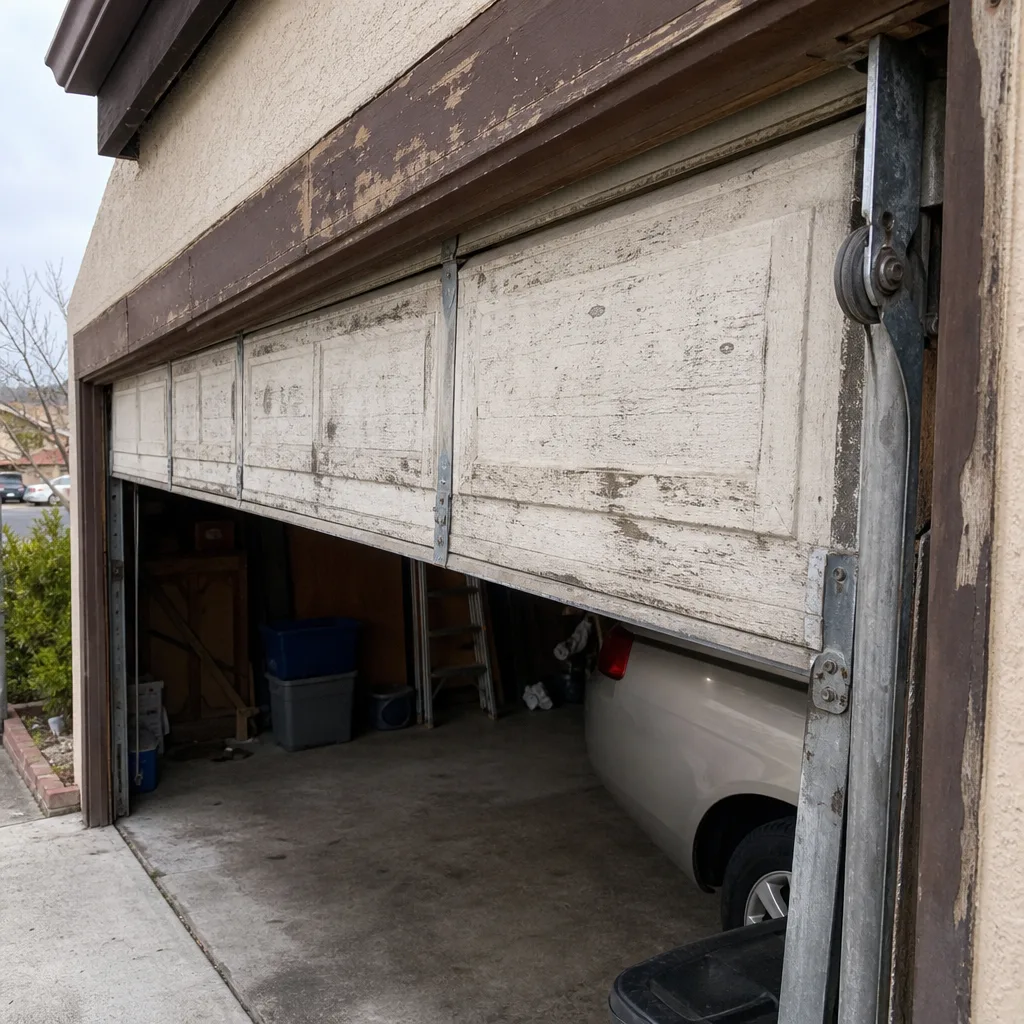 Before
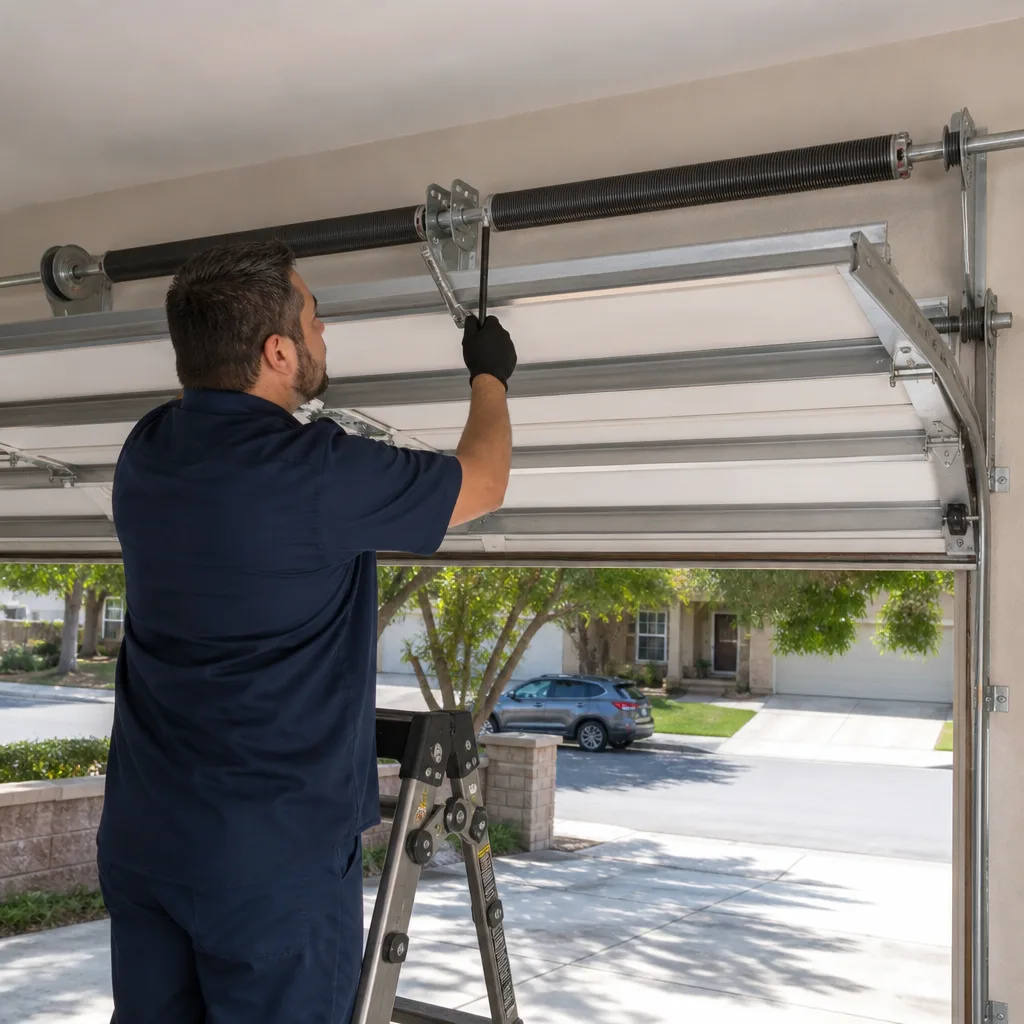 After
After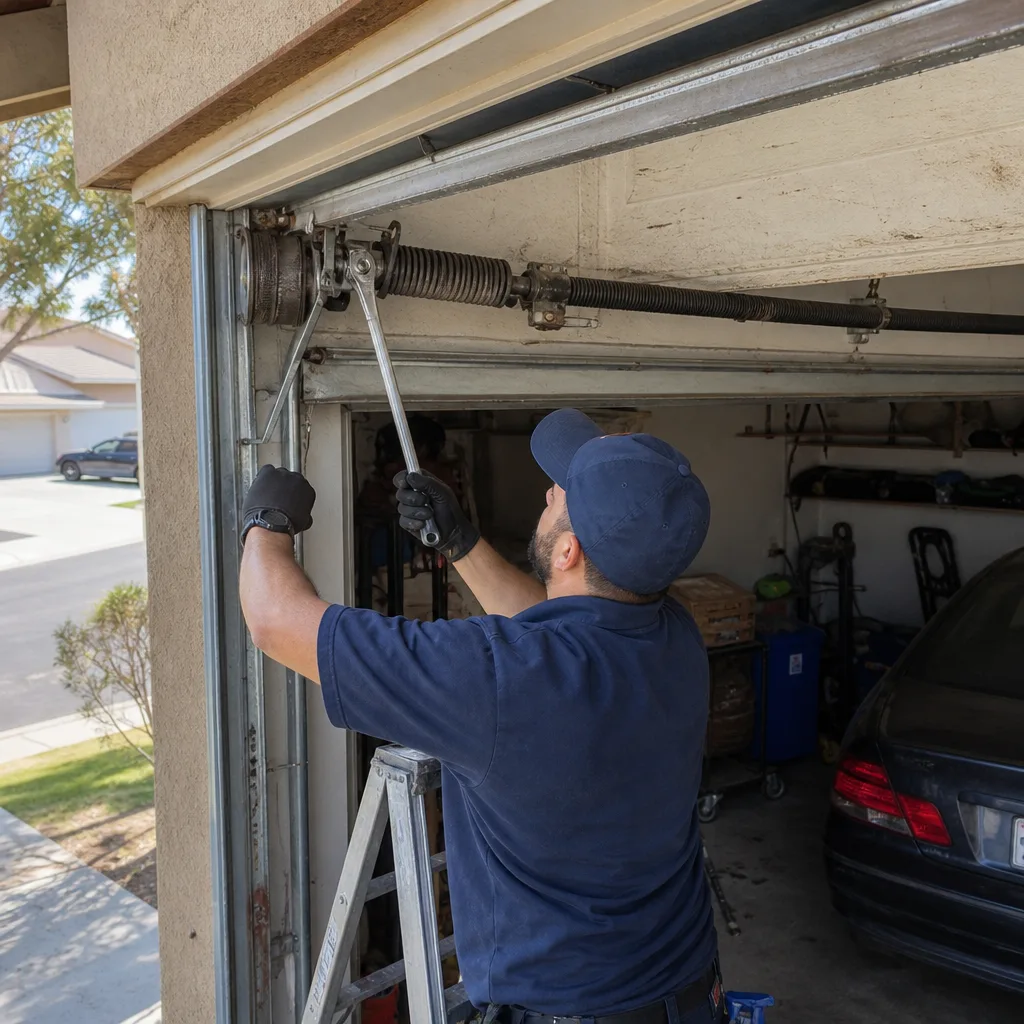 Before
 After
After Before
 After
After